
Rowing for Weight Loss: Does It Work and How to Start
Rowing is one of the most effective exercises for weight loss. It works 85% of the body's muscles, according to Concept2, burns 400-800 calories per hour depending on intensity, and is low-impact enough to do daily without destroying your joints. But the machine alone won't make you lose weight — how you use it and what you do outside the gym matters more.
Here's an honest look at rowing for weight loss: what the science says, how it compares to other cardio, and a practical plan to get started.
Why Rowing Works for Weight Loss
It Burns a Lot of Calories
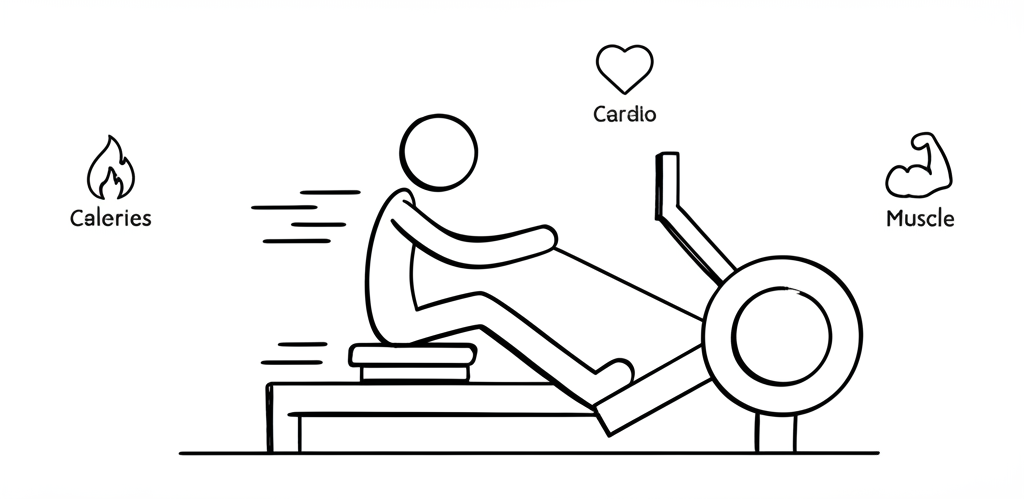
Rowing is a full-body exercise. Every stroke engages your legs (quads, hamstrings, glutes), core (abdominals, obliques, erectors), and upper body (lats, traps, biceps, forearms). This total-body engagement means rowing has a higher caloric expenditure per hour than most other forms of cardio.
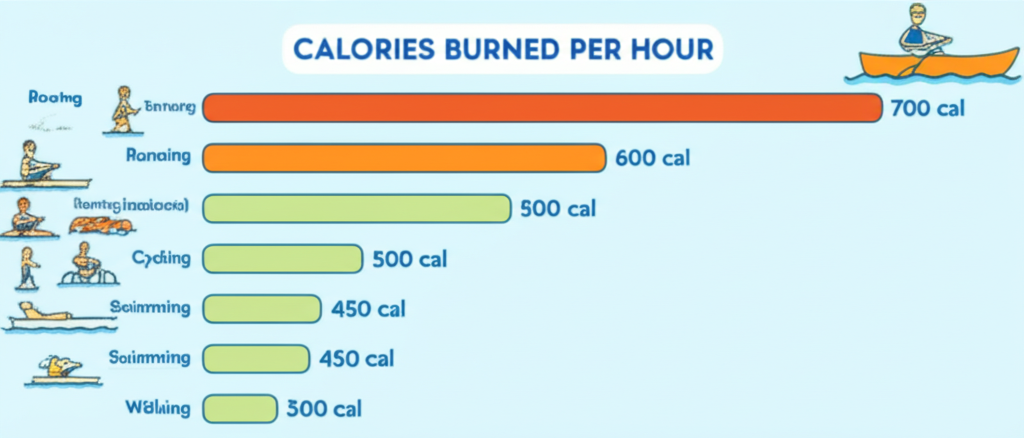
Approximate calorie burn per hour for a 155-lb person:
| Activity | Calories/Hour |
|---|---|
| Rowing (moderate) | 500 |
| Rowing (vigorous) | 700 |
| Running (6 mph / 10 min mile) | 600 |
| Cycling (moderate) | 500 |
| Swimming (moderate) | 450 |
| Walking (3.5 mph) | 300 |
| Elliptical (moderate) | 400 |
Source: Harvard Health estimates. Individual results vary based on weight, intensity, and fitness level.
At vigorous intensity, rowing is comparable to running — but without the impact stress on knees, ankles, and hips.
It's Low Impact
Running burns a lot of calories but hammers your joints. Each running stride loads your knees with 2-3x your bodyweight. For heavier individuals (the people who often most need to lose weight), this makes running painful or outright risky.
Rowing is essentially zero impact. Your feet never leave the footplate. There's no pounding, no jarring — just smooth, continuous motion. This means you can row 5-6 days per week without the overuse injuries that limit runners.
It Builds Muscle While You Lose Fat
Most pure cardio (walking, cycling, running) burns calories but does little to build or maintain muscle mass. Rowing is different. The resistance component — especially at higher intensities — provides enough muscular stimulus to maintain lean mass during a caloric deficit.
This matters because muscle is metabolically active. More muscle means a higher resting metabolic rate — you burn more calories even when you're not exercising. Rowing helps preserve this advantage during weight loss.
It's Time-Efficient
A 30-minute rowing session at moderate intensity burns roughly 250-350 calories. That's a meaningful contribution to a daily caloric deficit in half the time it would take walking. If time is your biggest constraint (and for most people, it is), rowing gives you more results per minute.
The Uncomfortable Truth: Calories In vs. Calories Out
No amount of rowing will overcome a bad diet. Weight loss requires a caloric deficit — burning more calories than you consume. Rowing is an excellent tool for increasing the "calories out" side of that equation, but it can't compensate for overeating.
A 30-minute rowing session might burn 300 calories. That's roughly one large muffin, one pint of beer, or one and a half tablespoons of peanut butter. It's easy to undo an entire workout with a single snack.
The most effective approach combines:
- Moderate caloric restriction — eat 300-500 calories below your maintenance level. Don't go extreme; aggressive deficits lead to muscle loss, fatigue, and rebound.
- Consistent exercise — rowing 4-6 times per week for 30-45 minutes creates a meaningful caloric deficit over time.
- Protein intake — 0.7-1.0g per pound of bodyweight per day to preserve muscle mass during the deficit.
How to Start: A 12-Week Rowing Plan for Weight Loss
This plan assumes you're new to rowing and using an erg (indoor rower). It progresses gradually to prevent injury and build sustainable habits.
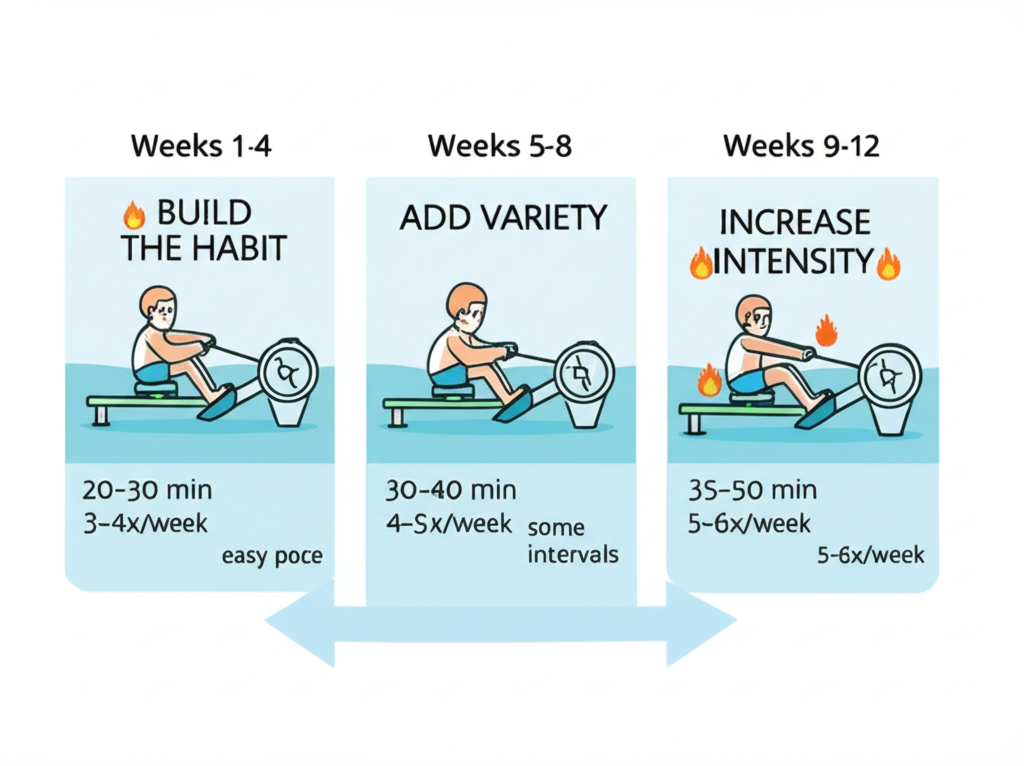
Weeks 1-4: Build the Habit
Goal: Row 3-4 times per week, 20-30 minutes per session. Focus on technique and consistency, not intensity.
Workout structure:
- 5-minute warm-up: easy rowing at rate 18
- 15-20 minutes: steady rowing at a pace where you can hold a conversation
- 5-minute cool-down: easy rowing
Rate: 18-22 strokes per minute Intensity: You should be able to talk in complete sentences. If you're gasping, slow down.
Why this works: The first month is about building the rowing habit, learning proper technique, and letting your body adapt. Pushing too hard too early leads to burnout and injury. Read our beginner's guide to rowing technique to make sure your form is right.
Weeks 5-8: Build Duration and Add Variety
Goal: Row 4-5 times per week, 30-40 minutes per session. Introduce intervals.
Workout rotation:
| Day | Workout |
|---|---|
| Monday | 35 min steady state at rate 20 |
| Tuesday | Rest or light activity |
| Wednesday | Intervals: 1 min hard / 2 min easy x 8 |
| Thursday | 30 min steady state at rate 18 |
| Friday | Rest |
| Saturday | 40 min steady state at rate 20 |
| Sunday | Optional: 20 min easy row or walk |
Why intervals: High-intensity interval training (HIIT) on the erg burns more calories per minute than steady state and creates an "afterburn effect" (excess post-exercise oxygen consumption, or EPOC) — your metabolism stays elevated for hours after the workout. But HIIT is taxing. Limit it to 1-2 sessions per week and keep the rest of your training easy.
Weeks 9-12: Increase Intensity and Volume
Goal: Row 5-6 times per week, 35-50 minutes per session. Mix steady state, intervals, and tempo work.
Workout rotation:
| Day | Workout |
|---|---|
| Monday | 45 min steady state at rate 20-22 |
| Tuesday | Intervals: 500m hard / 1 min rest x 6 |
| Wednesday | 40 min steady state at rate 18-20 |
| Thursday | Tempo: 3 x 10 min at a challenging but sustainable pace, 2 min rest |
| Friday | Rest |
| Saturday | 50 min steady state at rate 20 |
| Sunday | Optional: 25 min easy row |
By week 12, you'll be rowing 4-5 hours per week. At moderate-to-vigorous intensity, that's roughly 2,000-2,500 extra calories burned per week — enough to lose 0.5-0.75 lbs per week from exercise alone, before any dietary changes.
Common Mistakes
Going Too Hard Every Session
The biggest mistake new rowers make is treating every session like a race. High-intensity rowing is fatiguing and unsustainable. If every session leaves you exhausted, you'll dread the erg and eventually quit.
80% of your sessions should be easy. Conversational pace, low rate, comfortable effort. This is where you build your aerobic base and burn the most total calories over time (because you can sustain it day after day without breaking down).
Ignoring Technique
Bad technique wastes energy and causes injury. If you're hunching your back, rushing the slide, or pulling with your arms before your legs, you're working harder for less speed and more pain.
Invest time in learning proper form. A few sessions focused on technique will make every future workout more effective. See our technique guide for the fundamentals.
Setting the Damper to 10
The damper is not a difficulty setting. Cranking it to 10 doesn't mean you're working harder — it means you're using a heavier resistance that fatigues your muscles before you get a good cardiovascular workout. Set it to 3-5 and row for longer at a higher quality. More on damper settings from Concept2.
Only Rowing
Rowing is excellent, but variety has benefits. Adding 1-2 sessions per week of walking, cycling, swimming, or strength training prevents overuse, keeps things interesting, and builds a more well-rounded fitness base. Strength training in particular helps preserve muscle mass during weight loss — see our strength training guide for rowers.
Expecting Instant Results
Weight loss is a slow process done right. Expect 0.5-1.5 lbs per week of fat loss with a combination of rowing and moderate dietary changes. That's 25-75 lbs in a year — a life-changing transformation that's sustainable because you built the habits gradually.
If the scale isn't moving but your clothes fit better and you feel stronger, you may be gaining muscle while losing fat. Muscle is denser than fat, so body composition can improve before the scale reflects it.
Beyond the Erg: Rowing on the Water
If indoor rowing gets you hooked, consider joining a rowing club and getting on the water. On-water rowing adds balance, coordination, fresh air, and a community of people who share your new hobby. Many people who start rowing for weight loss discover a sport they love.
Read our guide on how to join a rowing club to find a program near you.
What Results to Expect
Realistic expectations based on consistent effort (4-5 sessions per week, moderate dietary adjustments):
| Timeline | What to Expect |
|---|---|
| Week 1-2 | Soreness in new muscles. Initial water weight changes. |
| Month 1 | Clothes feel slightly looser. Energy levels improve. Rowing feels less awkward. |
| Month 2 | Visible changes in body composition. Better sleep. Improved mood. |
| Month 3 | Meaningful weight loss (8-15 lbs). Significantly improved cardiovascular fitness. |
| Month 6 | Major transformation possible (15-30+ lbs). Rowing feels natural and enjoyable. |
| Month 12+ | Life-changing results. You're no longer "trying to lose weight" — you're a rower. |
The best part: unlike crash diets, exercise-driven weight loss with rowing builds fitness, strength, and a sustainable habit. People who exercise regularly are dramatically more likely to maintain their weight loss long-term.
More Resources
- The beginner's guide to rowing technique — nail the fundamentals
- Rowing machine buyer's guide — choosing the right erg for home use
- Erg benchmarks by age and level — track your progress as you get fitter
- How to improve your erg time — once you're hooked, here's how to get faster
- Training tools and apps — apps to track workouts and nutrition