How to Join a Rowing Club: Beginner's Guide
You've been erging at the gym, watching rowing videos, or you've always been curious about getting out on the water. You want to join a rowing club. But the sport feels intimidating — exclusive, expensive, confusing. You don't know anyone who rows. You don't know the jargon. You don't own a boat.
Here's the good news: rowing clubs are actively looking for adult beginners. Most clubs run Learn to Row (LTR) programs specifically designed for people with zero experience. You don't need to own equipment, know the terminology, or be exceptionally fit. You just need to show up.
What Is a Rowing Club?
A rowing club is a membership-based organization that provides access to boats, coaching, a boathouse (where boats are stored), and a community of rowers. Clubs range from small volunteer-run operations with a dozen members to large programs with hundreds of rowers, multiple coaches, and fleets of boats.
Most clubs in the US are non-profit organizations run partially or entirely by volunteers. They're affiliated with USRowing, the national governing body, which provides insurance, regatta sanctioning, and membership infrastructure.
The Learn to Row Program
Almost every rowing club offers a Learn to Row (LTR) program for adult beginners. This is your entry point. Here's what to expect.
What You'll Learn
- Basic rowing technique — the stroke sequence, balance, turning
- How to carry, launch, and dock a boat safely
- Rowing terminology (port, starboard, bow, stern, catch, drive, etc.)
- Safety: what to do if a boat flips, how to navigate traffic patterns
- Enough skill to row in a group or supervised open row
Program Format
Most LTR programs run 4-8 sessions over 2-4 weeks. Sessions are typically 2 hours: a land briefing, warm-up on the erg, and time on the water. Class sizes range from 8-20 people with 1-3 coaches.
Some clubs start beginners in a barge (a wide, stable rowing platform for 8+ people) or a training shell before moving to regular boats. Others go straight into 4-person or 8-person boats, which are more stable than singles.
When They Run
LTR programs are seasonal. Most clubs run them in:
- Spring (April-May) — The most popular season. Start here if you can.
- Late summer (August-September) — A second wave for fall rowing.
- Some year-round clubs in warm climates offer winter programs.
Programs fill up fast, especially at popular clubs. Register early — often 1-2 months before the program starts.
Cost
LTR programs typically cost $150-$400 for the full course. This includes all coaching, boat use, and usually a temporary club membership for the duration. Some clubs include a USRowing membership (required for insurance).
After Learn to Row: What Comes Next
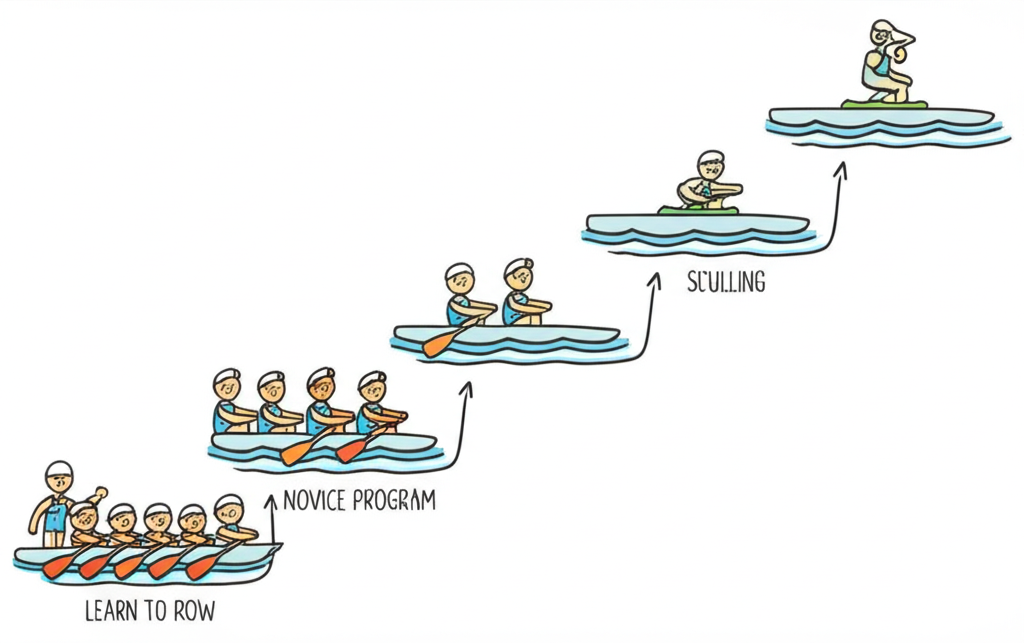
Finishing LTR is the beginning, not the end. Most clubs offer several paths forward.
Recreational/Novice Program
The most common next step. You'll row 2-4 times per week in crew boats (4s and 8s) with a coach. The focus is building fitness and technique in a social, low-pressure environment. This is where most adult beginners land and many happily stay for years.
Sculling Program
Sculling means rowing with two oars (one in each hand), as opposed to sweep rowing (one oar per person). Many clubs offer a progression from sweep boats into doubles and eventually singles (one-person boats). Sculling is more technically demanding but gives you independence — you can go out alone whenever you want.
Competitive/Racing Program
If you catch the bug and want to race, most clubs have a competitive squad that trains harder and enters regattas. Masters rowing (the term for post-college adult rowing) has a thriving racing scene with regattas throughout the year, organized by age groups in 10-year brackets (e.g., 30-39, 40-49, etc.).
Indoor/Erg Program
Some clubs, especially in cold climates, run structured erg programs through the winter. These are great for maintaining fitness when the water is frozen.
What Does Club Membership Cost?
After your LTR program, ongoing membership varies widely.
| Type | Typical Range |
|---|---|
| Annual adult membership | $500-$2,000 |
| Annual student/young adult | $200-$600 |
| Monthly (some clubs) | $75-$200 |
| Learn to Row program | $150-$400 |
| USRowing annual membership | $75 |
| Regatta entry fees | $30-$80 per race |
What's included: Boat use, coaching (for organized programs), boathouse access, and club events. You do not need to buy a boat. Club boats are shared.
What costs extra: USRowing membership (required for racing), regatta fees, team uniforms, optional private coaching, and travel for away regattas.
Compared to other sports with coaching and equipment, rowing is moderate. It's cheaper than golf or sailing, comparable to competitive cycling, and more expensive than running.
What to Wear and Bring
Clothing
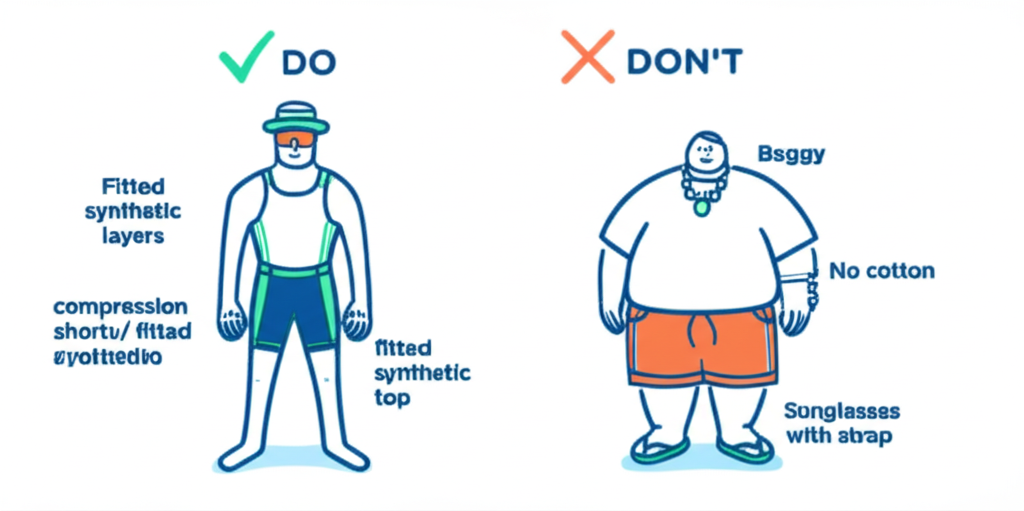
- Form-fitting athletic clothing. Loose shorts and shirts catch on the sliding seat and oar handles. Tights, compression shorts, or spandex shorts are ideal.
- Layers for cool mornings. A fitted base layer and a tight-fitting jacket or vest. You'll warm up fast once you start rowing.
- No cotton. It gets wet, heavy, and cold. Synthetic fabrics or wool.
Footwear
Most boats have built-in shoes attached to the footplate. You'll row barefoot in the boat shoes. Wear sneakers or sandals to walk to the dock, then switch into the boat shoes.
Bring
- Water bottle
- Sunscreen (you'll be on the water with no shade)
- Sunglasses with a strap (they will fall in the water otherwise)
- A change of clothes (you may get splashed or wet)
- Hat or visor for sun protection
Don't Bring
- Expensive electronics you're afraid of getting wet
- Bulky items that won't fit in a small boat
- Jewelry that could catch on equipment
How to Find a Club Near You
USRowing Club Finder
USRowing's club finder is the most comprehensive database of rowing clubs in the United States, searchable by location.
Our Club Directory
We maintain a directory of rowing clubs with descriptions, links, and location data for hundreds of programs across the country.
Community Resources
Check our communities directory for rowing forums, Reddit communities, and social media groups where you can ask for local recommendations.
What to Look for in a Club
Not all clubs are the same. When evaluating options, consider:
- Location and commute. You'll be going early in the morning, often before work. A 45-minute drive at 5 AM gets old fast.
- LTR program quality. Talk to people who've done it. Read reviews. A good LTR program has experienced coaches and a clear path to continued rowing.
- Adult beginner community. Some clubs are heavily focused on youth or college programs and treat adults as secondary. Look for a club with a robust masters or adult program.
- Boat fleet. More boats means more water time and less waiting. A good fleet has a range of boats from stable training boats to faster competitive shells.
- Culture. Visit the boathouse. Talk to members. Is the atmosphere welcoming? Do people socialize after rowing? Competitive or recreational? Some clubs are intensely focused on racing; others are social groups that happen to row.
- Coaching. Paid coaching staff generally means more structure and better instruction than volunteer-only programs, though many volunteer coaches are excellent.
Frequently Asked Questions
Do I need to be fit to start?
No. LTR programs are designed for all fitness levels. Rowing is low-impact and self-paced — you can't go faster than you're able. You'll get fit by rowing.
Can I start if I can't swim?
Most clubs require basic swimming ability for safety. You should be able to tread water for a few minutes and swim a short distance. If you can't, consider taking swimming lessons first. You will wear a life jacket (PFD) in many beginner programs, but swim ability is still expected.
I'm in my 40s/50s/60s. Am I too old?
Not even close. Masters rowing is one of the fastest-growing segments of the sport. Many people start rowing in their 40s, 50s, and beyond. National and international masters regattas have age categories up to 80+. The low-impact nature of rowing makes it ideal for older athletes.
Can I row solo right away?
Usually not. Singles (one-person boats) are tippy and require solid technique. Most clubs start beginners in larger, more stable boats (4s and 8s) and offer a sculling progression later. Some clubs have stable "recreational singles" designed for newer rowers.
What if there's no club near me?
If on-water rowing isn't accessible, indoor rowing is a great alternative. Check our equipment guide for help choosing an erg. Many cities also have rowing-focused fitness studios that offer group erg classes.
What time do rowers practice?
Early. Most club practices start between 5:30-7:00 AM to take advantage of calm water conditions. Some clubs also offer evening rows. Weekend practices tend to be slightly later (7:00-9:00 AM).
Ready to Start?
The hardest part is signing up. Once you show up to that first LTR session, the club will take care of the rest — providing the equipment, instruction, and community you need.
Find a club in our clubs directory, register for their next Learn to Row program, and take the first stroke.
More Resources
- Browse rowing clubs — find a club near you
- Rowing communities and forums — connect with other rowers online
- The beginner's guide to rowing technique — prepare before your first session
- Rowing boat types explained — understand the boats you'll be rowing
- Your first rowing regatta — what to expect when you start racing