
Hydrow vs WaterRower vs Concept2: Which Rowing Machine Should You Buy?
No affiliate links on this page right now. How we make money
Bottom line: If you're unsure, buy the Concept2 RowErg.
- Best overall and best for training data: Concept2 RowErg
- Best for a living room: WaterRower Original
- Best for coached classes: Hydrow Origin
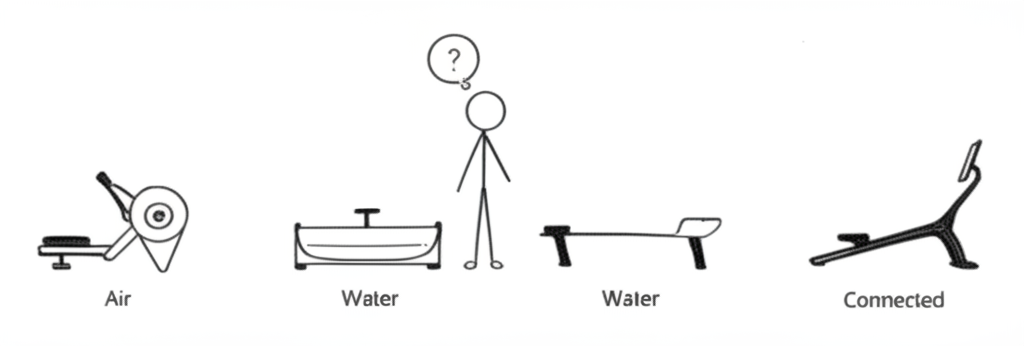
Concept2 RowErg
- Price (list)
- $990
- Membership
- None needed
- Resistance
- Air (flywheel, damper 1–10)
- Monitor / screen
- PM5
- Footprint
- 96 × 24 in (244 × 61 cm); allow 9 × 4 ft in use
- Machine weight
- 57 lb (26 kg)
- Max user weight
- 500 lb (Concept2 testing); 300 lb under EN 20957-7
- Max inseam
- 38 in (longer needs the extra-long monorail)
- Seat height
- 14 in (36 cm)
- Storage
- Separates into two pieces without tools; caster wheels
- Power
- Two D-cell batteries (no outlet needed)
- Warranty
- 5 yr frame; 2 yr moving parts and monitor; 30-day money-back
WaterRower Original
- Price (list)
- $1,199–$1,699 (by wood: oak/vintage $1,199, club/shadow $1,299, cherry $1,499, walnut $1,699)
- Membership
- not published
- Resistance
- Water (WaterFlywheel; resistance rises with effort)
- Monitor / screen
- S4 with built-in Bluetooth
- Footprint
- 82.25 × 22.25 in (210 × 56 cm)
- Machine weight
- 67 lb (30.5 kg)
- Max user weight
- 330 lb (150 kg)
- Max inseam
- not published
- Seat height
- not published
- Storage
- Stands upright on rubber dolly wheels
- Power
- not published
- Warranty
- not published
Hydrow Origin
- Price (list)
- $2,195 list (on sale for $1,745 when checked)
- Membership
- $50/month per household
- Resistance
- Electromagnetic drag
- Monitor / screen
- 22" touchscreen (1920 × 1080)
- Footprint
- 86 × 25 in, 47 in tall
- Machine weight
- 145 lb
- Max user weight
- 375 lb (170 kg)
- Max inseam
- 36 in ("typically accommodates users up to 6'6"")
- Seat height
- not published
- Storage
- Upright only with the Upright Storage Kit ($80, sold separately)
- Power
- Outlet; 100–240 VAC, 35 W average
- Warranty
- 1 year (per product page)
| Spec | Concept2 RowErg | WaterRower Original | Hydrow Origin |
|---|---|---|---|
| Price (list) | $990 | $1,199–$1,699 (by wood: oak/vintage $1,199, club/shadow $1,299, cherry $1,499, walnut $1,699) | $2,195 list (on sale for $1,745 when checked) |
| Membership | None needed | not published | $50/month per household |
| Resistance | Air (flywheel, damper 1–10) | Water (WaterFlywheel; resistance rises with effort) | Electromagnetic drag |
| Monitor / screen | PM5 | S4 with built-in Bluetooth | 22" touchscreen (1920 × 1080) |
| Footprint | 96 × 24 in (244 × 61 cm); allow 9 × 4 ft in use | 82.25 × 22.25 in (210 × 56 cm) | 86 × 25 in, 47 in tall |
| Machine weight | 57 lb (26 kg) | 67 lb (30.5 kg) | 145 lb |
| Max user weight | 500 lb (Concept2 testing); 300 lb under EN 20957-7 | 330 lb (150 kg) | 375 lb (170 kg) |
| Max inseam | 38 in (longer needs the extra-long monorail) | not published | 36 in ("typically accommodates users up to 6'6"") |
| Seat height | 14 in (36 cm) | not published | not published |
| Storage | Separates into two pieces without tools; caster wheels | Stands upright on rubber dolly wheels | Upright only with the Upright Storage Kit ($80, sold separately) |
| Power | Two D-cell batteries (no outlet needed) | not published | Outlet; 100–240 VAC, 35 W average |
| Warranty | 5 yr frame; 2 yr moving parts and monitor; 30-day money-back | not published | 1 year (per product page) |
| Source | Concept2 spec pagechecked 2026-10-02 | WaterRower spec pagechecked 2026-10-02 | Hydrow spec pagechecked 2026-10-02 |
A rowing machine is one of the few pieces of cardio equipment that works your legs, back and arms in every stroke, and it's low-impact enough to use most days. Prices run from a few hundred dollars to well over $2,000, and the three machines people compare most, Concept2, WaterRower and Hydrow, are built for very different buyers.
This guide compares them on what each manufacturer publishes (price, size, weight, user limits, subscription) and on the things specs don't capture: feel, noise and what you get without a membership. Every spec in the tables links to the manufacturer page we took it from.
The three types of resistance
How a rower makes resistance decides how it feels and sounds.
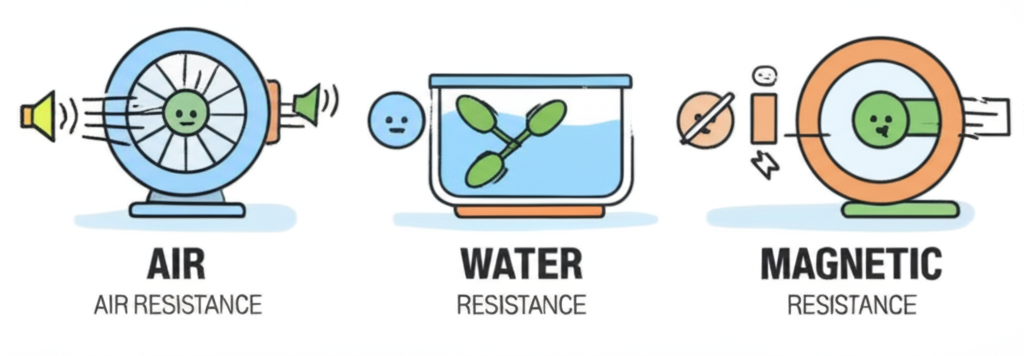
- Air (Concept2). A fan spins as you pull. The harder you pull, the more the air pushes back, so resistance rises naturally with effort. The trade-off is noise: it sounds like a big fan.
- Water (WaterRower, Ergatta). Paddles spin in a tank of water. Resistance also rises with effort, and the sound is a whoosh rather than a roar.
- Electromagnetic or magnetic (Hydrow, most budget rowers). Magnets create the drag. Very quiet. Hydrow uses electromagnetic drag that the machine controls; budget magnetic rowers usually have a knob with fixed levels, which feels less like rowing because resistance doesn't rise with effort the same way.
Concept2 RowErg
$990 · air · 57 lb · no subscription
The RowErg (still often called the "Model D") is a common sight in gyms, boathouses and CrossFit boxes. Its PM5 monitor shows split, watts, stroke rate and distance, and because every RowErg is built to the same spec, a 2K on one is comparable with a 2K on another. That's why rowing coaches and college recruiters ask for Concept2 times. Concept2's free online logbook and ErgData app record your workouts without a subscription.
It's the lightest of the three at 57 lb, splits into two pieces for storage, and runs on two D-cell batteries, so it doesn't need an outlet. Concept2 lists a 500 lb maximum user weight in its own testing and fits inseams up to 38 inches. A tall-legs version raises the seat from 14 to 20 inches for $1,155.
The downsides: it's loud, it looks like gym equipment, and there are no built-in classes; you bring your own phone or tablet app.
WaterRower Original
$1,199–$1,699 depending on wood · water · 67 lb · no subscription
The WaterRower is built from solid hardwood in Rhode Island, and the Original Series comes in oak, cherry, walnut and other finishes; WaterRower says the wood is the only difference between Original models. It stands upright on its dolly wheels in about the floor space of a chair, which is why it shows up in so many living rooms.
The feel is smooth, and the sound of moving water is much quieter and more pleasant than a fan. The S4 monitor now has Bluetooth built in and connects to WaterRower's free Connect app and third-party rowing apps. Classes cost extra, through CityRow's touchscreen add-on or an app.
The downsides: times aren't comparable with Concept2 scores, so there's no shared standard for a 2K. The 330 lb user limit is also lower than the other two.
Hydrow Origin (and Wave and Arc)
$2,195 list (often on sale) · electromagnetic · 145 lb · $50/month membership
Hydrow is the Peloton approach to rowing: a large touchscreen with instructor-led classes filmed on real water, plus strength, yoga and Pilates classes off the rower. The membership is $50 a month and covers everyone in the household.
The Origin has a 22-inch screen; the newer Arc has a 24-inch screen for $2,295 list, and the compact Wave has a 16-inch screen, weighs 102 lb and lists at $1,995. All three take users up to 375 lb and inseams up to 36 inches. Hydrow's prices change often and the machines are frequently on sale, so check the current price.
The downsides: cost and dependency. Without a membership, Hydrow says the machine runs in a "Just Row" mode with on-screen metrics but no workout videos, no music and no saved stats. At 145 lb the Origin is heavy, and it needs an $80 kit to stand upright. Like WaterRower, its numbers aren't comparable with Concept2 scores.
Hydrow vs WaterRower
This is the comparison most people searching are stuck on, and it comes down to classes vs. furniture.
- Choose Hydrow if a coach on screen is what will get you rowing three times a week. You're paying for content: $50 a month on top of the machine.
- Choose WaterRower if you want a beautiful, quiet machine you'll use on your own or with a free app. It costs less up front, has no subscription, and stores upright without accessories.
Both are much quieter than an air rower. If you like the idea of a water rower with a built-in screen, look at the Ergatta, which combines water resistance with game-style workouts on a 21.5-inch screen.
Is Hydrow worth it compared to Concept2?
Over three years, a Hydrow Origin at list price plus membership costs about $4,000 ($2,195 + 36 × $50). A Concept2 RowErg costs $990 with nothing ongoing. That gap buys you production-quality classes and a big screen. If you already know how to structure a workout, or you're happy following a plan like our 4-week beginner program, the Concept2 does the rowing part for a quarter of the price. If you've bought gym equipment before and stopped using it, the classes are the thing that may change that, and Hydrow is worth considering.
Other machines worth knowing
- Ergatta (water, from $1,699): see above. Membership is $468 a year at list price.
- Budget magnetic and air rowers ($200–$500): fine for occasional use, but the monitors aren't calibrated to any standard and build quality varies widely. If your budget is under $700, a used Concept2 is usually the better buy.
The best value: a used Concept2
Because Concept2s are sold to gyms and teams in large numbers, used ones turn up regularly on Facebook Marketplace, Craigslist and in our rowing classifieds directory. Check that the PM monitor powers on, the chain moves smoothly without rust, and the seat rolls without catching. A new chain is an inexpensive part from Concept2 if it's worn.
How to decide
Choose Concept2 if: you want accurate data, comparable scores, no subscription and easy resale.
Choose WaterRower if: the machine lives in your living room and you'd rather hear water than a fan.
Choose Hydrow if: coached classes on a big screen are what will keep you rowing.
More resources
- Erg pace calculator: what your split means in watts and calories
- Erg benchmarks by age and level: what times to aim for
- Beginner rowing machine workout: a 4-week plan for your first month
- Best home rowing machine, Is Hydrow worth it?, Hydrow vs Concept2 and Concept2 vs WaterRower
- Rowing equipment directory and manufacturers
The machines at a glance
Best overall and best for training data
Concept2 RowErg
Air (flywheel, damper 1–10) resistance · $990
Who it's for: Anyone who wants accurate, comparable numbers, no subscription, and a machine that's easy to resell.
Pros
- PM5 numbers are comparable with every other RowErg, so your 2K means something
- No subscription; free Concept2 logbook and ErgData app
- Lightest machine here at 57 lb, and splits in two for storage
- Runs on two D-cells, so it doesn't need an outlet
Cons
- The fan is loud compared with water or magnetic rowers
- No built-in classes; use a phone or tablet app
- Long footprint at 8 ft, more with clearance
Best for a living room
WaterRower Original
Water (WaterFlywheel; resistance rises with effort) resistance · $1,199–$1,699 (by wood: oak/vintage $1,199, club/shadow $1,299, cherry $1,499, walnut $1,699)
Who it's for: Home rowers who care about looks, noise and upright storage more than comparable scores.
Pros
- Hardwood frame and upright storage suit a shared living space
- Water sound instead of fan noise
- No subscription; free WaterRower Connect app, with Bluetooth built into the S4
- Made in Rhode Island, per WaterRower
Cons
- S4 numbers aren't comparable with Concept2 scores, so no shared 2K standard
- 330 lb user limit is lower than Concept2 or Hydrow
- Classes cost extra (CityRow touchscreen or a third-party app)
Best for coached classes
Hydrow Origin
Electromagnetic drag resistance · $2,195 list (on sale for $1,745 when checked) + $50/month per household
Who it's for: People who will row more often with an instructor on a big screen, and are happy to pay $50 a month for it.
Pros
- Large 22-inch screen for the on-water classes
- Quiet electromagnetic resistance
- One membership covers everyone in the household
Cons
- $50/month membership; without it the machine runs in a basic "Just Row" mode
- Heaviest machine here at 145 lb
- Numbers aren't comparable with Concept2 scores
Verdict
If you're unsure, buy the Concept2 RowErg. It's the cheapest of the three at $990, needs no subscription, and its numbers are comparable with every other RowErg. Pick the WaterRower if the machine lives in your living room and you'd rather hear water than a fan. Pick a Hydrow only if guided classes are what will get you rowing; over three years the $50 monthly membership adds $1,800 to the price.
Frequently asked questions
›Is Hydrow worth it compared to Concept2?
Only if you'll use the classes. Hydrow's Origin lists at $2,195 plus a $50/month household membership; the Concept2 RowErg is $990 with no subscription. Without a membership, Hydrow runs in a basic Just Row mode with no workout videos and no saved stats, so the value is mostly in the content.
›Hydrow vs WaterRower: which is quieter?
Both are far quieter than an air rower like the Concept2. Hydrow uses electromagnetic drag, so the main sound is the seat and the screen audio. A WaterRower makes a soft whoosh of water that many people like, and the sound rises as you row harder.
›Can you compare WaterRower or Hydrow times with Concept2 times?
Not reliably. Each brand calculates pace its own way, and only Concept2 machines are calibrated to a shared standard. Use a Concept2 if you want to compare 2K times with other rowers or with college recruiting standards.
›Which rowing machine takes the least space?
Of these three, the WaterRower Original is the shortest at 82.25 inches and stands upright without accessories. The Concept2 is 96 inches long but splits into two pieces. Hydrow's Origin needs an $80 kit to stand upright; its smaller Wave model is 80 inches long.
Best overall and best for training dataConcept2 RowErg
See it